

As a young band director, one of my many challenges was how to program for concerts. Being in a small Midwestern high school with a strong and dominant jazz program, planning the concert band concerts was more difficult than I had anticipated.
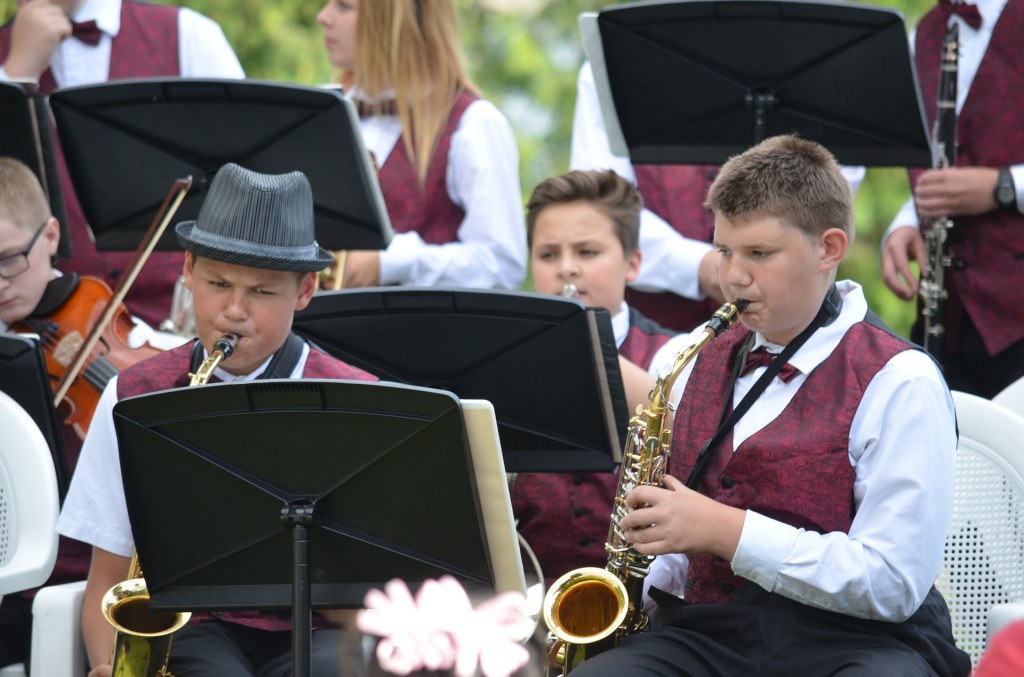
First of all, the concert band instrumentation was far from balanced. With the dominance of the jazz program the number of saxophones, trumpets and trombones was adequate but the flutes, clarinets, French horns and percussion were lacking. Double reeds were non-existent. The morale of the concert band was also low as if to say, “We don’t get much attention, so what’s the use?”

I am a firm believer in a balanced band program with all facets having equal importance. My challenge was to keep the jazz program alive and well but also to raise the level of the marching and concert band to a comparable level.

Being a product of a small Midwestern school system with an amazing music program as well as undergraduate training with an Eastman trained band director (played with Frederick Fennel in the Eastman Wind Ensemble) I had a solid foundation for concert programing. Having taught with and performed under the direction of numerous colleagues who were programing aficionados has honed my skills as well.

Beginning with this first band director gig and progressing throughout my 40+ year teaching career my programing formula evolved depending on the situation. Listed below are some suggestions:
EVALUATE YOUR ENSEMBLE’S STRENGTHS AND WEAKNESSES AND PROGRAM ACCORDINGLY.
Challenging your students to grow and learn is always the goal. I told my students, “I will challenge you! That is how you will grow and improve. However I will not break you. I will never give you music beyond your capabilities.”

Over programing your concerts beyond you students level is counterproductive and even can be damaging to the ensemble’s moral and self-esteem. It is a delicate balance between challenging your students attempting music they are not ready to perform. Yes, challenge them to grow technically and musically, but at the same time keep their overall skill level in mind.
ACCESS YOUR PREPARATION TIME
Ask yourself these questions when planning your next concert: Do you have a scheduled concert four or five weeks after you finish marching band season? How often are your in-school rehearsals? Do you rehearse daily or are you on an alternating day block schedule? Check your school calendar for in-service days, parent/teacher conferences or any other events that will affect your concert preparation.

Are you performing for parents, the student body, a music festival or a state conference? Each one of these will dictate the program selections. You certainly would not program a serious multi-movement work for an all-school assembly. Nor would you program the school pep song for a music festival performance.

Judging the length of you concert can be tricky involving several factors. Whether you are programing a concert for one ensemble or a variety of groups will certainly determine the number, length and style of your musical selections.
When estimating concert length I would add the average length of each piece then add a few minutes transition time between numbers. This worked well and helped avoid marathon concerts and/or concerts that took less time than the time it took parents to drive to the school and park.
When programing, try using the “Menu” formula. This isn’t set in stone but it can be a starting point in planning balanced and satisfying concerts for your students and audience alike.
In a typical five course meal you have these elements:
Appetizer – whets the palate
Salad – Some substance but not too much
Main Course – the “meat” of the meal
Desert – Sweet, fun and entertaining
After Dinner Beverage – finish with a splash
Applying this “menu” to a concert program might look something like this:
- Appetizer
Strong opener Refreshing – Gets Attention – Short
Fanfare
Short Overture
- Salad
Change in Tempo or Mood
Slower – Melodic
- Main Course
The “meat” of the concert: More challenging for your students.
Major composition specific to your ensemble
Transcription of Orchestral piece
Multi-movement work
- Desert
Complete Contrast
Fun, entertaining, Show or Movie Medley
- After Dinner Beverage (not always necessary)
Like an encore but played quickly after previous piece
Novelty piece, Fast March, Gallop

This “menu” formula has infinite possibilities for variation depending on your situation.
Always consider:
+ STUDENT MUSICAL AND TECHNICAL LEVEL
+ PERFORMANCE SITUATION AND CONDITIONS
+ AUDIENCE APPEAL
I have been developing a series of digital products to help music educators. Though designed to help with remote and distance learning challenges, these have also had success with in-class individual review and drill as well as in-person group lessons. Check out my growing list of offerings on the links below.
https://www.teacherspayteachers.com/Store/Tbmusic
https://wow.boomlearning.com/author/tbmusic

 Tim Baldwin Music