They’re More Than Just Flash Cards!
So you have purchased a Rhythm Counting Basics Boom™ Card Deck for use with your music students. Is it just a digital flash card or are there other ways to use this product? Here are a few ideas that might expand the educational value of the Boom™ Card(s) in your digital library.
My RHYTHM COUNTING BASICS Boom™ Cards are designed for application to nearly every teaching scenario.
- Like-instrument or mixed instrument classes
- Small or large group classes.
- Students with access to an individual tablet or laptop
- If individual students do not have a tablet or laptop, the slides can be projected or displayed on a Smart Board.


IT IS ESSENTIAL THAT THE FOLLOWING RHYTHM DRILLS BE DONE WITH A STEADY BEAT. Use a metronome, preferably an electric or metronome app that can be amplified if necessary.
Establish a tempo and apply the rhythm within the tempo.
Too often students can say the counting but not always in tempo. As a result they inevitably perform the rhythm incorrectly. Applying the counting/clapping/playing procedure IN TEMPO is of utmost importance.
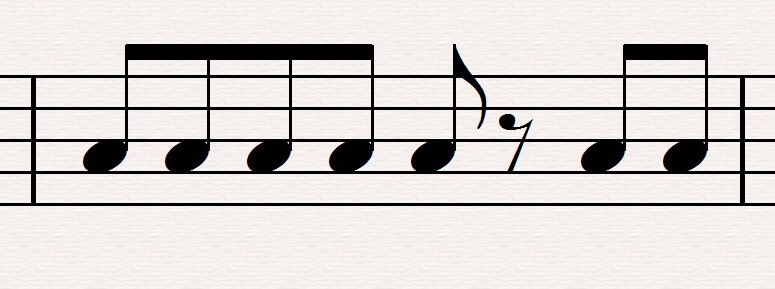
Have the students whisper the counting for rests.
Often students skip over rests as if they are not important. Whispering the counting for rests reinforces the importance of the rest and its placement within the context of the rhythmic pattern.
While clapping and counting a rhythm and whispering on the rests, try having them “hit the air” on the rests. This kinesthetic motion, combined with whispering the counting on the rest, will correlate to the actual sound of the rhythm.
IF THEY CAN COUNT AND CLAP THE RHYTHM CORRECTLY IN TEMPO THEY WILL PERFORM THE RHYTHM CORRECTLY.
MAKE LEARNING A FUN GAME!
You can create a game for any of my Boom™ Cards
GAME: Have a section or an individual student select which counting answer is correct. The student or students with the highest number correct answers will be entitled to a reward of your choice. Decide what incentives will work best for your students.
Suggestions:
- Gets to select a song from their lesson book to play
- Can be first to pack up after class
- Pick a prize from the grab bag
- Gets extra time to play a Boom™ Card of their choice
BE CREATIVE! You know your students. Create games and exercises that will engage them AND reinforce their understanding and playing proficiency of the rhythm(s) on which you are working.
THEN Proceed to the following to reinforce the rhythm.
Start with the larger group and progress to smaller group (pairs) to individual counting/clapping/playing. This will help students gain understanding and confidence.

SET #1 – RHYTHM QUESTION with FOUR COUNTING ANSWERS
- Count Out Loud (Whisper the rests)
- As a group
- Individually
- Count and Clap (Whisper the rests and “hit the air”)
- As a group or section (if class is mixed instrumentation)
- Individually
- Mix Clapping, Counting, ADD Playing
- Some students clap and count while others play on one note
- Alternate:
- If in small group like-instrument setting have half clap/count and others play.
- If in small group mixed-instrument setting have alternate between instrument groups, IE: flutes clap/count while clarinets play on one note, then switch.
- Large group mixed instrumentation: alternate clap/count and play by instrument sections.

- Play rhythm
- Together on ONE NOTE
- Together using different notes
- Use notes already learned
- Scale: play rhythm on each note of scale: up and down
- Chord: divide the class – assign the root, third and fifth of a chord to each section
- Individually or in pairs
- Down the line on one note
- Down the line with each student (or group) playing the rhythm using a scale, each student/group playing the next scale degree.

- Remaining Answers: Try this procedure on one or all of the remaining answers. Work on all three or just one if time or student focus is an issue.
- Count out loud (whisper on the rests)
- Count and Clap (whisper on rests and “hit” the air)
- Have students decide how the rhythm is written.
- Write their decisions on white board or Smart Board
- Write in the counting under the answer and decide if it matches the rhythm on the board.
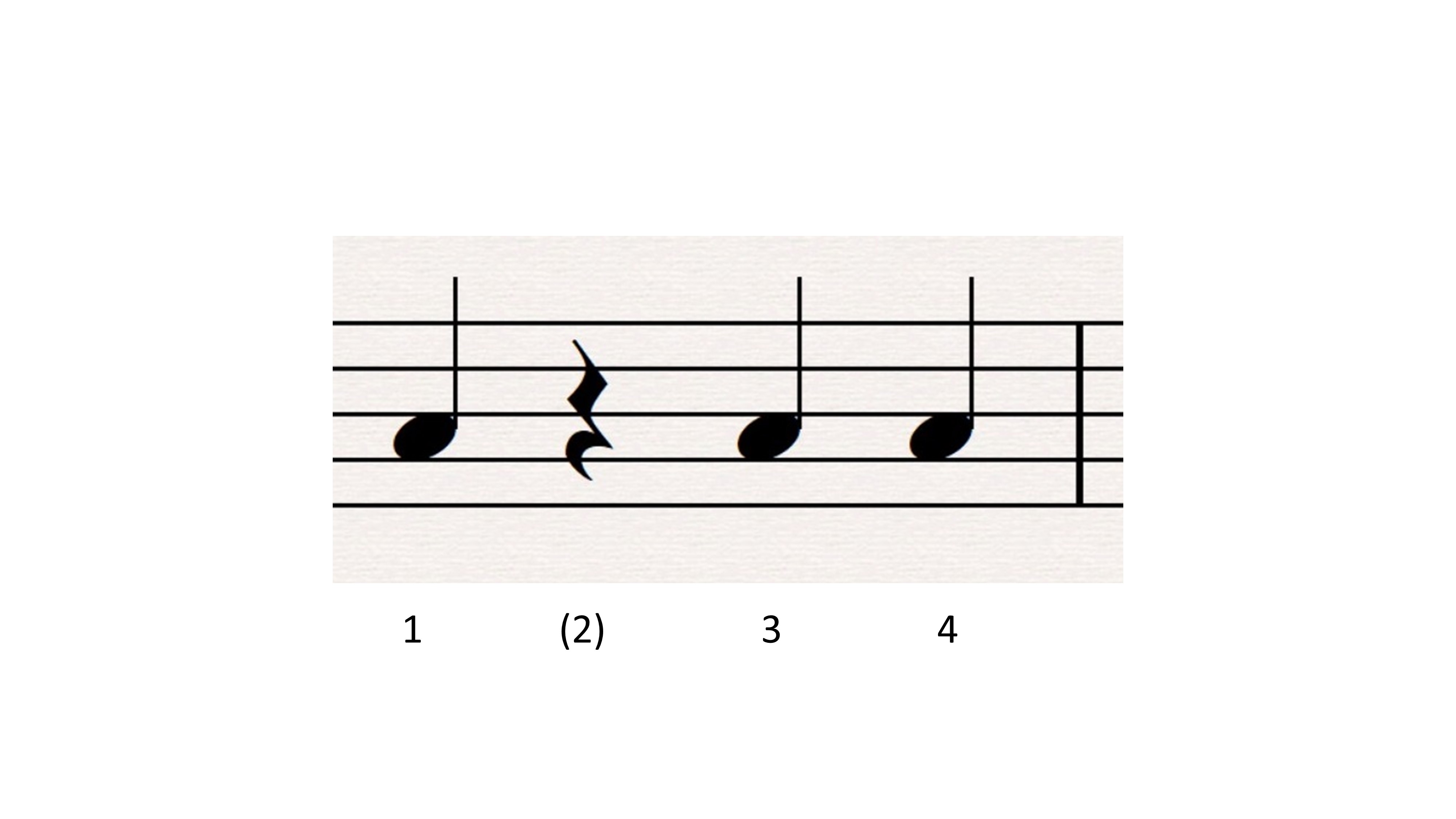
Set #2 – Counting Question with Four Rhythm Answers

Since the multiple choice answers are all one measure in length, each rhythm can be utilized individually or together. My thought was not only can these be used to help your students with their individual or group rhythmic skills by playing each rhythm together, they could also be used to introduce and/or strengthen independent ensemble performance skills.
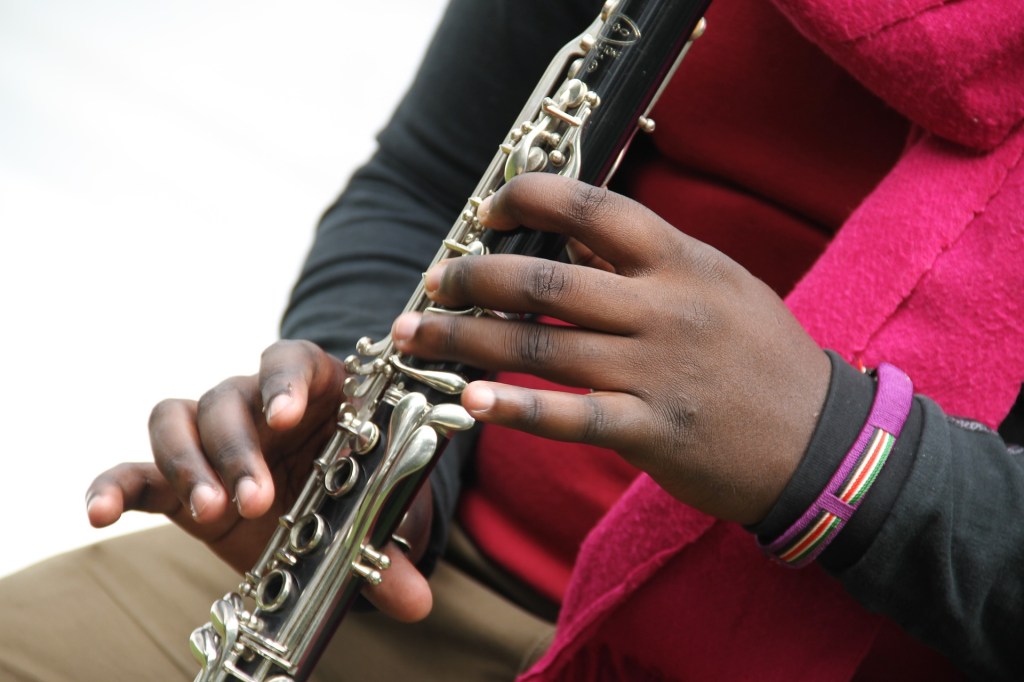
- Below is a suggested procedure:
- DECIDE AS A CLASS WHICH IS THE CORRECT ANSWER
- The rhythm matches the counting question.
- Count out loud – IN TEMPO
- Count and clap out loud – IN TEMPO
- Play on one note – IN TEMPO
- Play rhythm using a scale or pre-determined notes – IN TEMPO
- DECIDE AS A CLASS WHICH IS THE CORRECT ANSWER
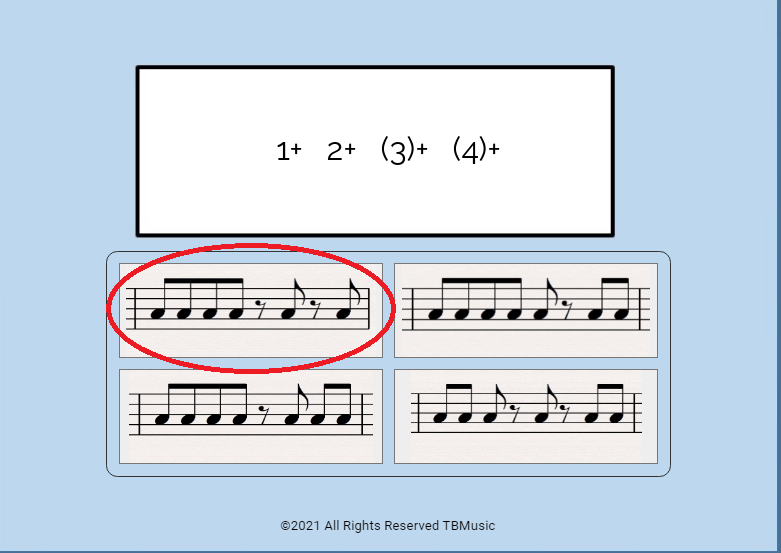
Once you are confident students are secure with the correct rhythmic answer, apply the above procedure to the remaining answers. THEN try the following:
- USING PROCEDURE 1, PRACTICE THE REMAINING RHYTHMIC ANSWERS
- Occasionally there is an answer that might not be completely compatible with the other three, like an even 8th note rhythm in a product on 8th note triplets.
- Use the rhythmic answer combinations that will work best for your students.
- USING PROCEDURE 1, PRACTICE THE REMAINING RHYTHMIC ANSWERS
- Occasionally there is an answer that might not be completely compatible with the other three, like an even 8th note rhythm in a product on 8th note triplets.
- Use the rhythmic answer combinations that will work best for your students.
- DIVIDE CLASS BY INSTRUMENTATION, ROWS, ETC.
- Before playing each rhythm together on their instruments, try using simple percussion elements to differentiate the sound of each rhythm. Have students either clap or tap their chair or music stand with their pencil (an incentive to have a pencil for class) or whatever you have in the classroom to make different sounds.
- One section plays or tap the correct rhythmic answer as the other section(s) plays or taps one of the remaining answers
- Rotate around your class having different sections play or tap the correct answer.
- Start with two rhythms, then three, then all four, depending on the size and instrumentation of your class.
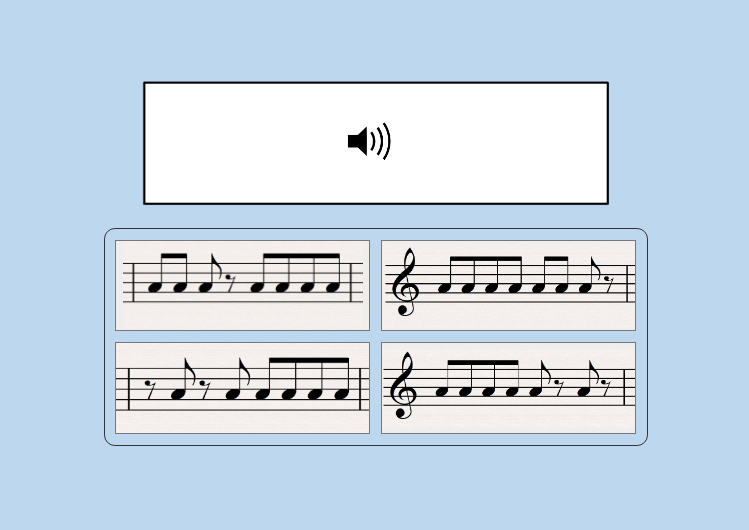
SET #3 – AUDIO QUESTION – FOUR RHYTHM ANSWERS
- Use this set of Boom™ Cards to help your students improve listening skills.
- Compare each rhythm answer to the others. Find similarities and differences.
- BEFORE LISTENING TO THE QUESTION
- Count each answer.
- Count and Clap each answer.
- Play each answer.
- LISTEN TO THE QUESTION
- Decide which rhythm answer is correct
- Play the correct answer WITH the Audio Question (using A concert)
- Play each of the other rhythms with the Audio Question
- Divide your group and play more than one rhythm with the recording
- DIVIDE CLASS BY INSTRUMENTATION, ROWS, ETC. – PLAY WITHOUT THE AUDIO ANSWER
- One section plays the correct rhythmic answer as the other section(s) plays one of the remaining answers
- Rotate around your class having different sections play the correct answer.
- Start with two rhythms, then three, then all four, depending on the size and instrumentation of your class.
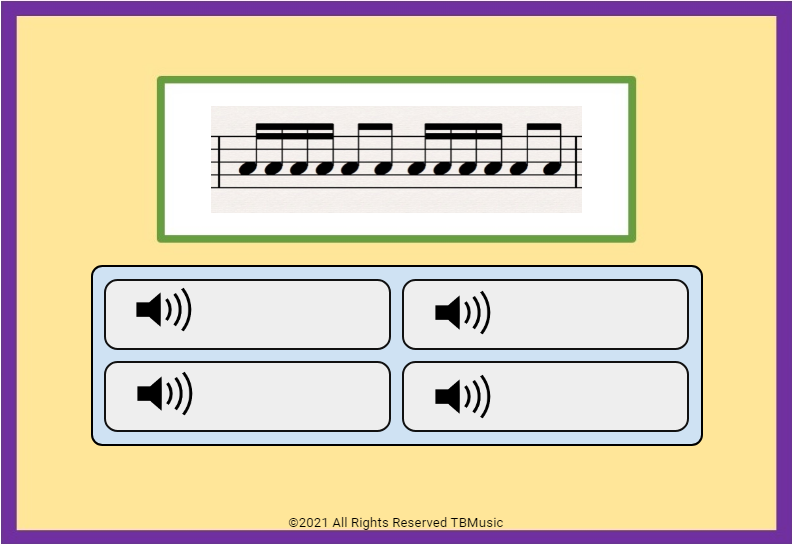
SET #4 – RHYTHM QUESTION – FOUR AUDIO ANSWERS
Use this set of Boom™ Cards to help your students improve their listening skills.
- COUNT THE RHYTHM QUESTION
- COUNT AND CLAP THE QUESTION
- PLAY THE QUESTION
- LISTEN TO EACH AUDIO ANSWER
- Decide which is the correct answer
- Discuss why the other answers are NOT correct – Compare and Contrast
These procedures above are just suggestions for additional ways to use each slide in RHYTHM COUNTING BASICS BOOM™ CARDS. You know your students better than anyone else. Be creative and have fun as your students become rhythmically solid musicians.
Find all of my RHYTHM COUNTING BASICS Boom™ Cards at:
https://wow.boomlearning.com/author/tbmusic?
OR

 Tim Baldwin Music