
Teach Beginning Instrumental Students
the Physical Feeling of
Tempo, Beat and Rhythm FIRST
As the beginning of the next school year approaches you are probably planning for your music classes including your beginning band or orchestra classes. Checking enrollment numbers, instrumentation, method book orders and the condition of your rehearsal facility (hoping the summer cleaning and floor waxing will be done in time).
When your beginning instrumental students enter your classroom for the first time they are wanting to “get to it” and play their instrument ASAP. Chances are they have already taken the instrument out at home and “experimented” with it. That excitement and energy is the fuel and momentum you want to encourage and maintain and can certainly be accomplished with careful planning and designing of your class lessons.

Of course there will be the essential instruction on instrument assembly, care & maintenance, playing position, posture, breathing, embouchure, tone production, bow technique and a plethora of additional instrument-specific techniques.
BUT WAIT!!
PRESS “PAUSE!”

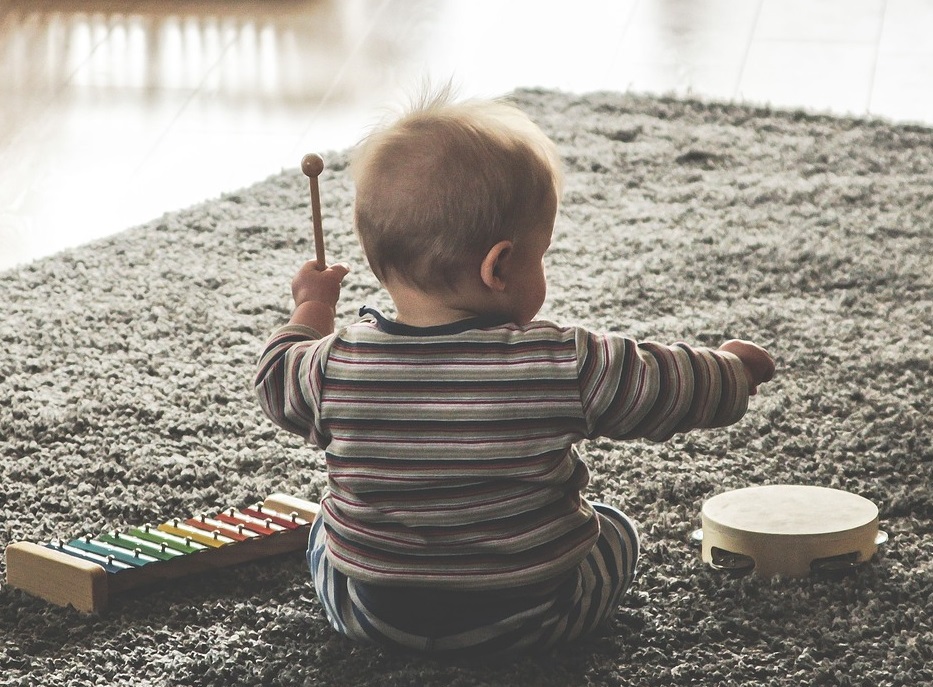
Help your new instrumentalists develop a STRONG, PHYSICAL SENSE OF BEAT, TEMPO & RHYTHM BEFORE they even open the method book. Think about it. We learn to speak before we learn to read. Wouldn’t this also apply to learning to play an instrument?
A quote from the Suzuki Method Explained states: (https://www.masterclass.com/articles/suzuki-method-explained)
“This philosophy uses listening, imitation, and repetition to help people learn to play a musical instrument as if it were their native tongue.” Later in the article is states, “The Suzuki method is an educational system that aims to teach children how to play music with the same ease that they learn to speak their native language.”

We all know that RHYTHM is the element of music which keeps all of those notes from becoming a random cacophony of sounds that might resemble an explosion rather than an etude or composition.

Beat (or pulse) and tempo are the foundation upon which rhythm is built. While tempo, beat, and counting each possess its own distinct role, they are intimately connected, relying on one another to create a harmonious musical experience.
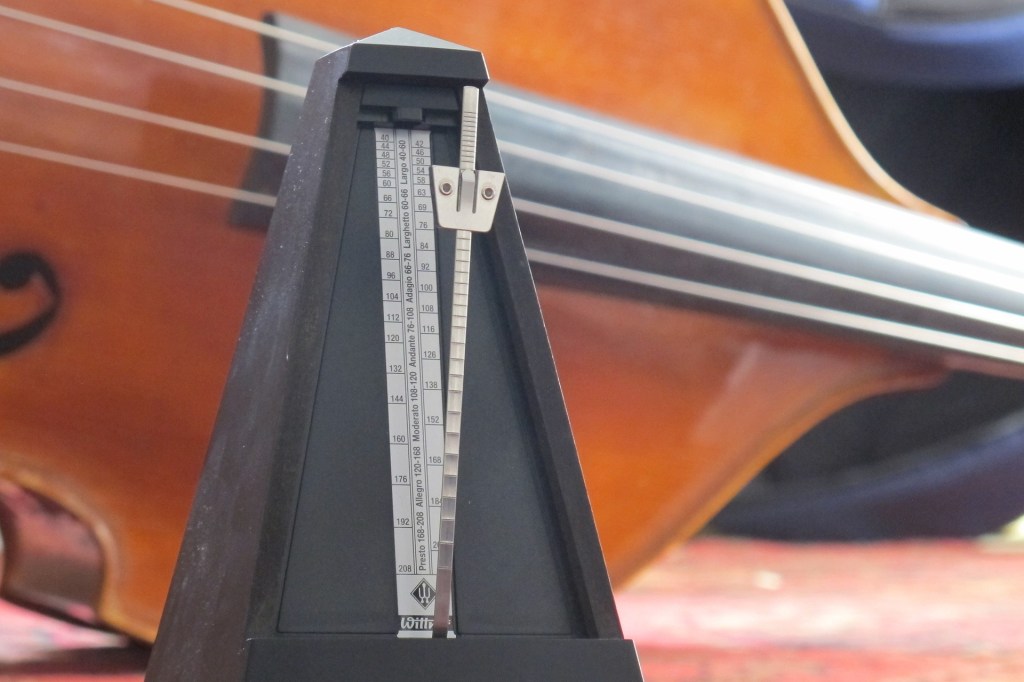
Rhythmic concepts can be incorporated into any instrumental class before students play their first sounds using a tapping-clapping-counting procedure. Establishing a strong physical sense of rhythm before reading notation will strengthen student understanding and confidence when they begin reading notation.

In a wonderful article from Teaching Rhythm Notation: Say-as-You-Play it states, “Counting rhythms achieves this by merging intellectual understanding with physical action. Vocalizing a rhythm is vastly different than simply playing it because of how closely the voice is linked with cognition.”
Also from Teaching Rhythm Notation: Say-as-You-Play, “Having your students count rhythms aloud …. will reveal whether they’re truly comprehending the material or not. The notes that are spoken out loud in counting exercises reflect what a child is thinking and how they’re interpreting the notes.”
The author of a well-known instrumental method book has many pertinent statements in his article Hearing the Sounds Before Reading the Notes. “…. instrumental music instruction should not begin before a student develops a sense of rhythm.”
This author goes on to say, “Students should develop their senses of rhythm and pitch and be able to produce a good tone on their instruments before they are ready to read music. Just as we learn to talk before reading, instrumentalists should learn pitch and rhythm before musical notation. This way, the notation simply represents what a student has already experienced playing, which is a basis of the sound-before-sight reading system.”

THE PROS AND CONS
Teaching rhythm before reading notes can have both advantages and disadvantages, depending on the context and the needs of the learner. Other factors will be your class situation:
Class size and instrumentation
Class length and frequency

Pros:
- Foundation for Timing and Musicality: Learning rhythm before reading notes allows students to develop a strong sense of timing, beat, and musicality. This is crucial for playing any instrument or singing accurately within a musical ensemble.
- Physical and Aural Development: Rhythm is often felt physically and heard aurally, making it more intuitive for beginners to grasp. Starting with rhythm can engage students on a more sensory level, helping them internalize musical concepts before moving to the abstract realm of note reading.
- Engagement and Motivation: Rhythm-based activities can be engaging and fun for beginners, which can enhance their motivation to continue learning and exploring music.
- Simplification of Learning Process: Learning rhythm first simplifies the initial learning process, allowing students to focus on one aspect of music at a time. This is especially pertinent for beginning instrumentalists. Often students can become overwhelmed by just putting opening the case and assembling their instrument. A gradual approach can help.
- Collaboration and Group Dynamics: Teaching rhythm early on facilitates group collaboration, as students can easily participate in rhythm-based activities together without needing advanced note-reading skills. This is particularly beneficial in classroom settings or group music lessons.
Cons:
- Missing Context: When rhythm is taught before note reading, students might miss out on understanding the relationship between the rhythm and the notes. This could lead to confusion later when they start integrating rhythm and note-reading skills.
- Transition Challenges: Moving from a rhythm-only approach to incorporating notes could be challenging for some learners. They might need to unlearn certain rhythmic habits or adjust their approach as they start reading notes.
- Varied Learning Paces: Different students learn at different paces, and some might be ready to learn notes alongside rhythm from the beginning. Delaying note reading for everyone to learn rhythm first could hinder faster learners’ progress.

The above cons are understandable but with a combined approach will help alleviate these potential issues. As you explore the physical aspect of beat and rhythm with students introduce the visual representation of the rhythm and the corresponding notes.
Many educators find that a balanced approach that introduces both rhythm and notes gradually can be effective in providing a well-rounded music education.
Your assessment of your students, classroom environment, schedule, etc. will be a determining factors as to your approach to the physical aspect of playing rhythms. After my 40+ year teaching career I still advocate the philosophy:
‘If they can count rhythms accurately, they will play them accurately.”
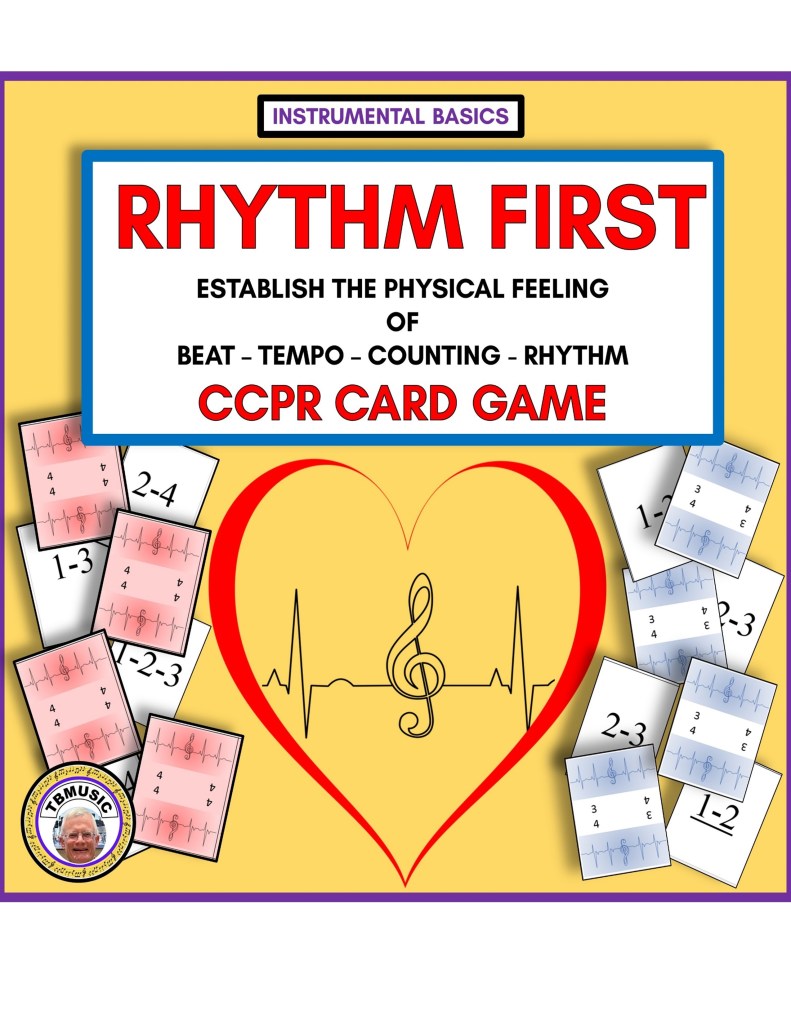
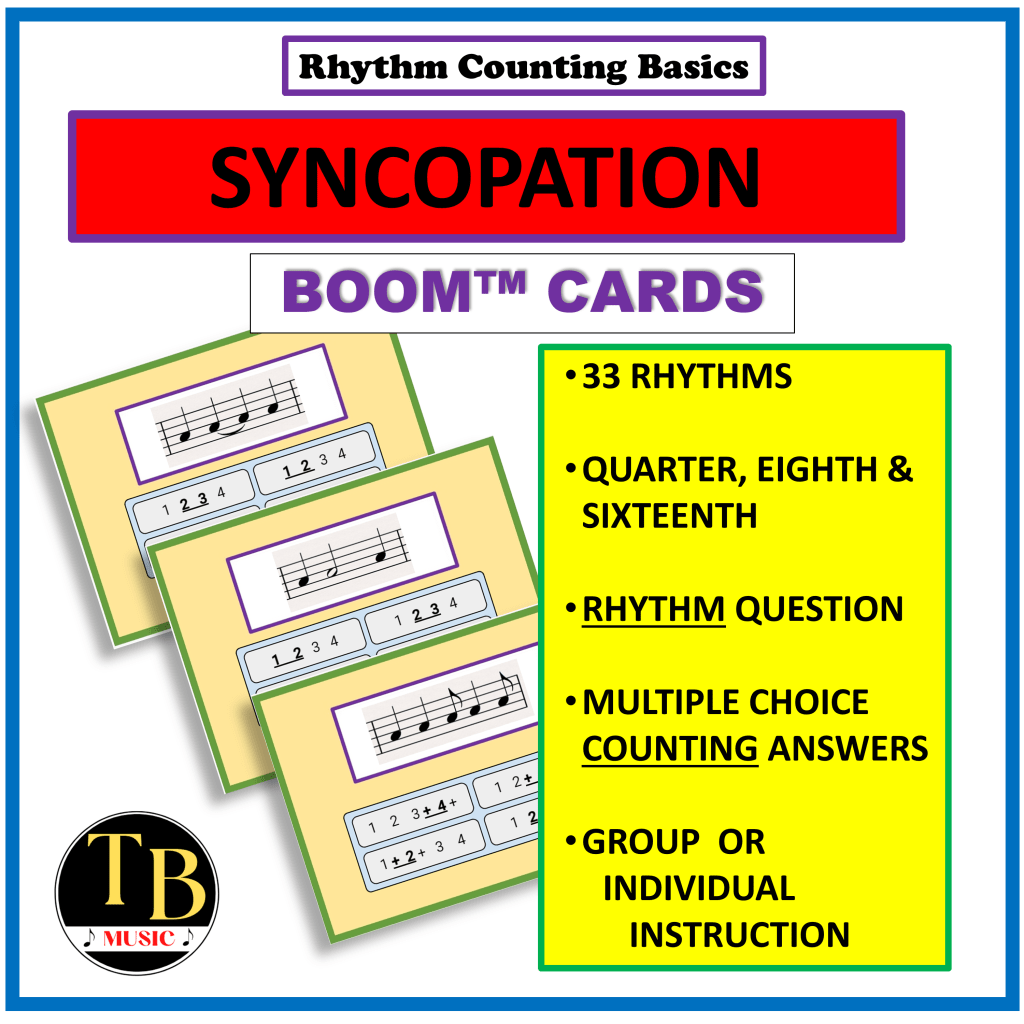
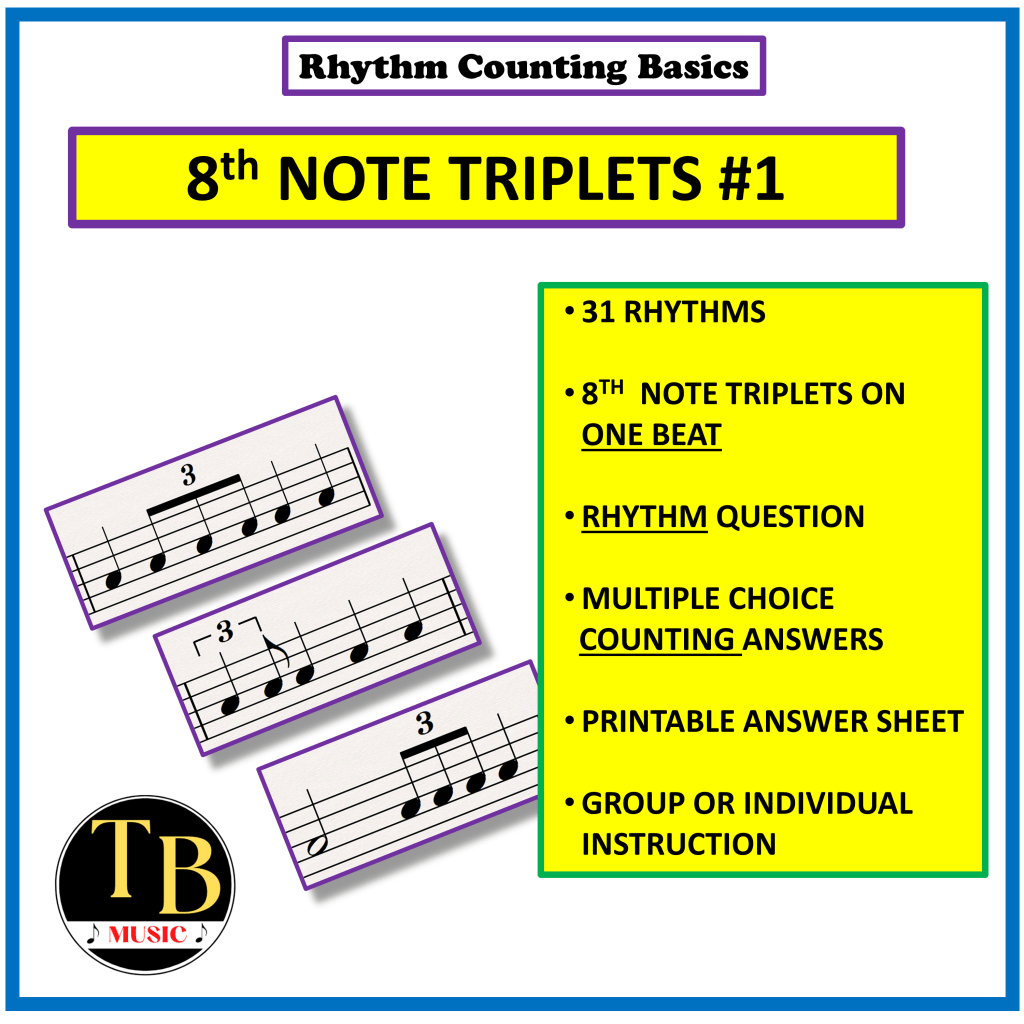
The product below is a step-by-step guide for teaching your beginning instrumentalists RHYTHM FIRST.
Click the following link to check out my other products:
https://www.teacherspayteachers.com/Store/Tbmusic
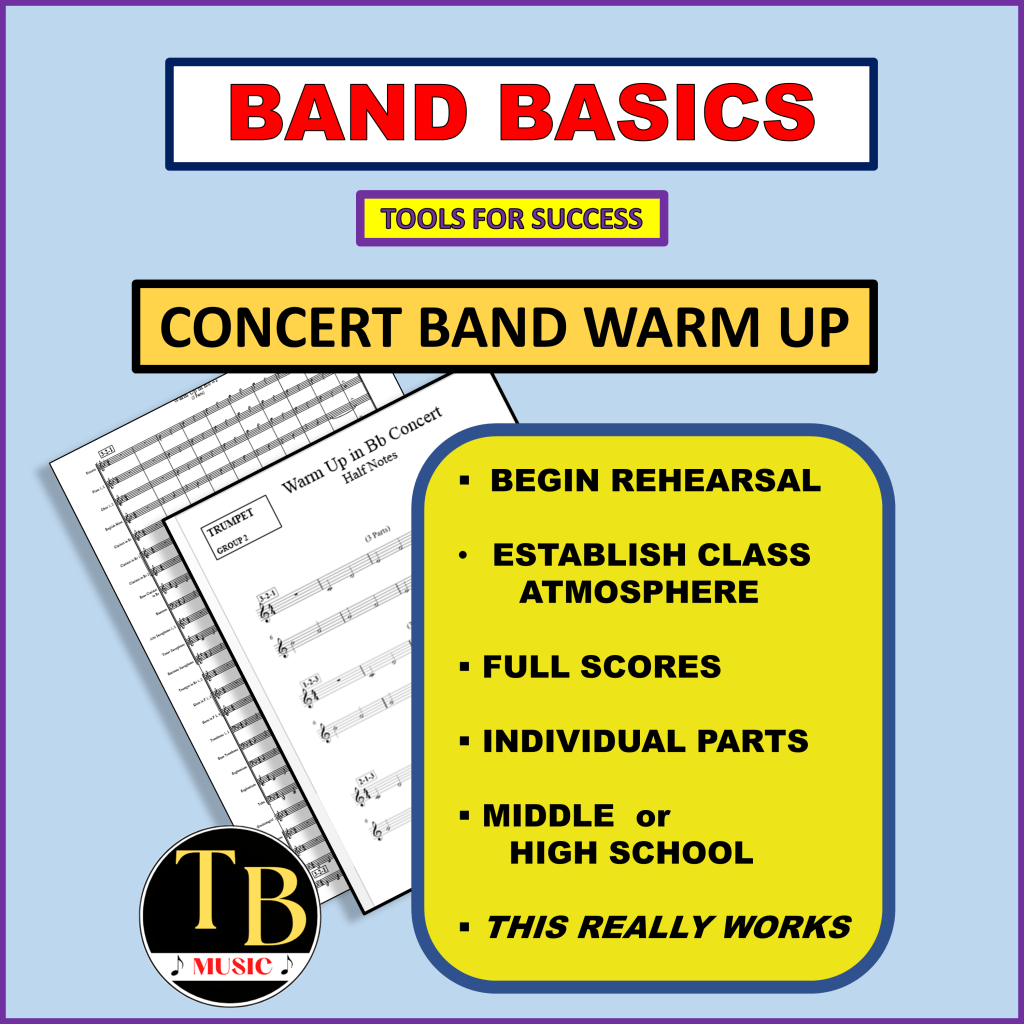
 Tim Baldwin Music