
Articulation Defines the Style
There seems to be quite a disparity of the definition and differentiation of these two terms. Searching on the internet, some have specific differences between the two terms and others say they are basically the same.

The Cambridge Dictionary has several definitions of the word genre:
Noun: style, especially in the arts, that involves a particular set of characteristics:
a particular subject or style of literature, art, or music:
Or:
Adjective: produced according to a particular model or style:
Well that certainly helps to clearly define the term!?!.

Case in point, “Stairway to Heaven” is defined as fitting into these genres:
Genres: Hard rock, Progressive rock, Folk rock, Rock, Folk
But what if “Stairway” is arranged by Harry Connick and performed by his big band? Does that change the genre? Or is it the same genre performed in a different style from the original? Or what if Basie’s “Shiny Stockings” is arranged and performed by the rap artist Jay-Z? (Highly unlikely but go with it). Would that be a rock genre performed in a rap style?
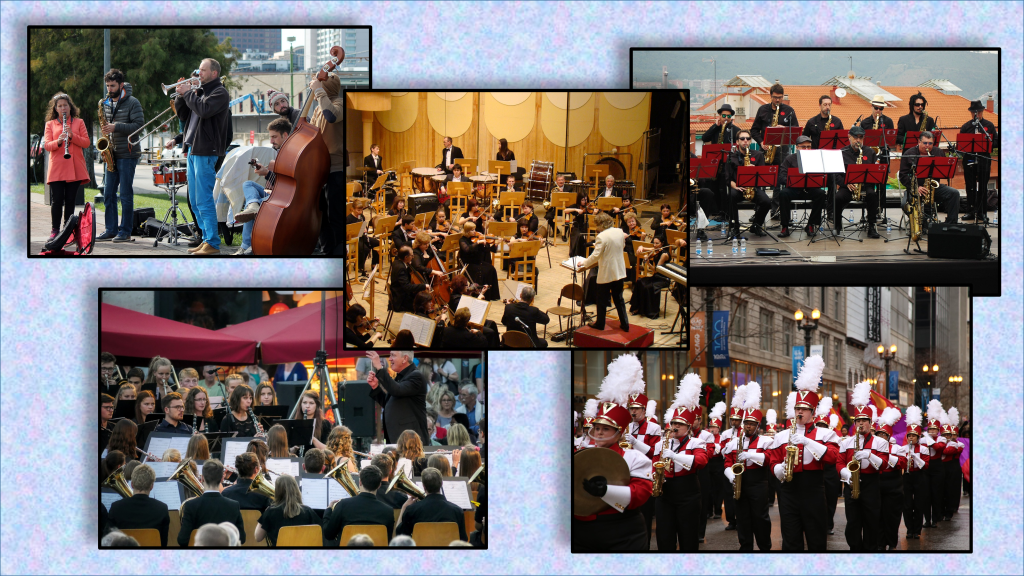
For the purposes of this article, I would define “genre” as the broader term describing the origin and/or the era during which the music was composed and performed. The “style” would be a combination of the performance elements of tempo, instrumentation, articulation, harmonic and melodic structure, rhythmic complexity, etc.

As in the examples above, “Stairway to Heaven” would remain in the Rock genre but performed in a “jazz” style. Or “Shiny Stockings” would remain a jazz genre but the Jay-Z performance would be in the “rap” style.

In a non-musical context, consider Robert Frost’s “Stopping by Woods on a Snowy Evening” being recited in a Rap style. It would still be a poem (genre) but performed in a different style. Or if the same poem is mumbled or spoken at a break-neck speed, it remains in the poem genre even though the performance style prevents clear communication of its content.

During my 40+ teaching career, when teaching students to stylistically perform a musical composition, my mantra was, “Articulation defines the style,” No matter the style, articulation is a HUGE component of the resulting performance.
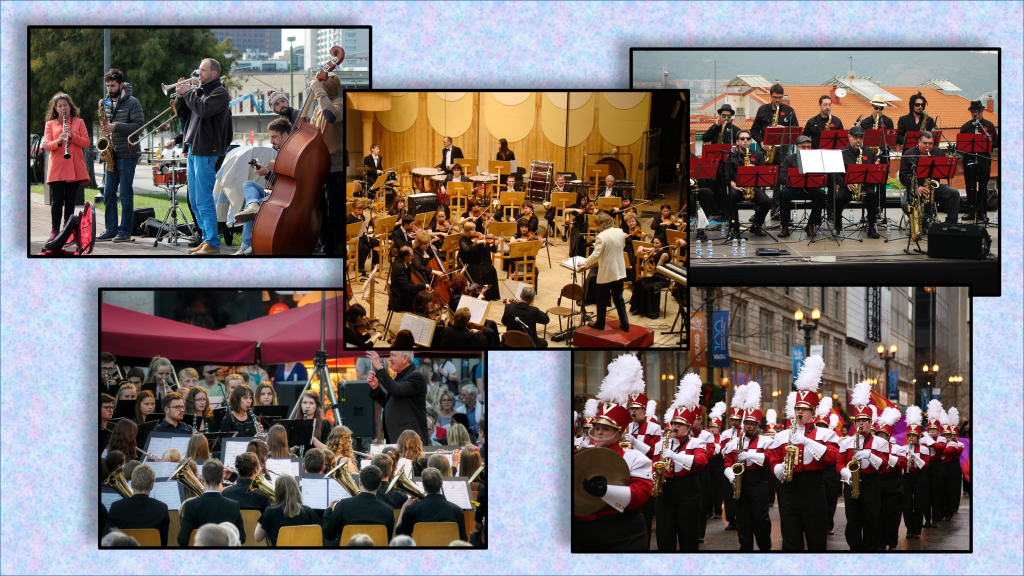
Contrast the instrumental articulation markings and performance style in “classical” music vs. the same or similar articulation symbols in “jazz” and/or “rock” music.
For wind instruments, some articulation symbols remain the same in both styles, with some slight differences. One source defines an accent as “emphasis, stress, or stronger attack placed on a particular note or set of notes.” However the performance of said accent depends on the style of music in which it occurs.

An accent in a wind part of an orchestral piece will be performed with more emphasis on the volume of air and less on the beginning articulation (more air, less tongue). In a Sousa march and Jazz or Rock charts, accents will be more firmly articulated (stronger attack) and separated.

Other articulations are executed differently depending on the style of music in which they appear. For example: a staccato in classical style, depending on the instrument, is performed with a firm yet light articulation at the beginning of the note followed by a short “lift” or unarticulated ending of the airstream (tah). In a Jazz/Rock arrangement the same staccato articulation would be a firmly articulated note but would be started the same way but clipped short with the tongue ending the note as well (dit).

Instrumental music teachers spend hours in the classroom helping students develop correct articulation for proper performance style. When moving from the “classical” articulation style as defined in most method books to a “Jazz” style for Jazz Ensemble, Combo or a concert piece in the Jazz/Rock style, adjustments need to be made.
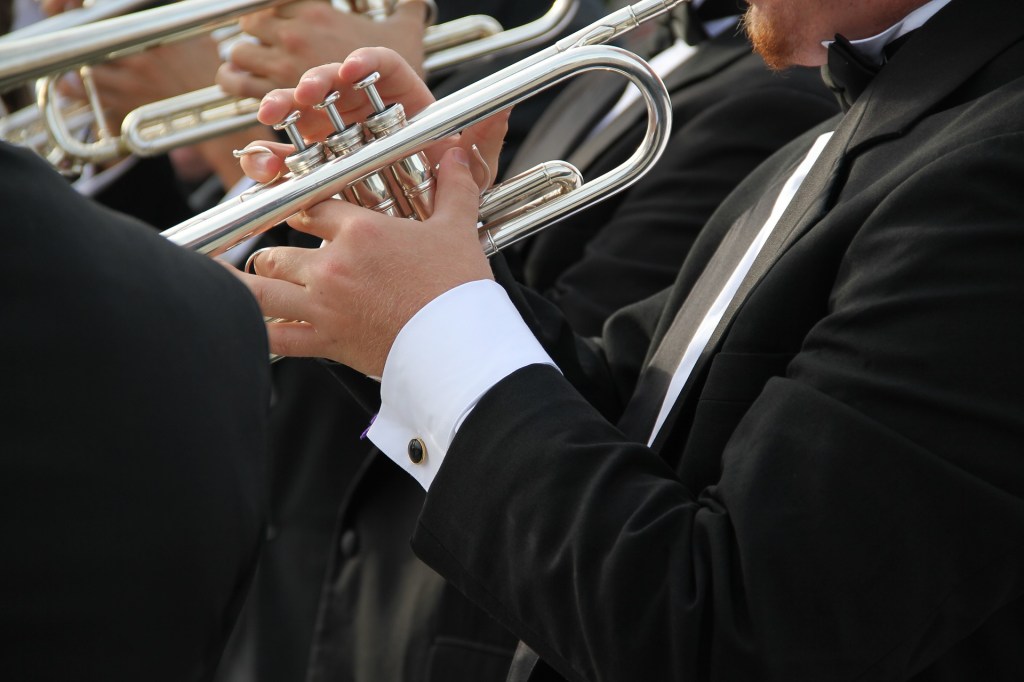
Spoken syllables can be an effective method to differentiate articulation styles. Example: staccato in classical style – “tah”. Staccato in jazz style “dit” (ended with the tongue), marcato in classical style “Tah” (accented staccato) and in jazz style “Dot” (accented staccato but slightly longer than normal staccato AND ended with the tongue).
Whatever technique used, it is vital for performers to be able to switch articulations to match and create the desired style. Without stylistically proper articulation the performance will end up being a mumbled mess of notes without style and thus, without the desired musical effect.
There are numerous resources available to assist instrumental music teachers in regards to articulation and style. Below is a Blues Warm Up that includes 8 common jazz rhythms with clearly marked articulations to produce the correct style.
Check it out at:
https://www.teacherspayteachers.com/Product/BLUES-WARM-UP-WITH-JAZZ-RHYTHMS-1-10634502
NEWLY REVISED!! ALSO AVAILABLE AT:
https://www.madebyteachers.com/products/blues-warm-up-jazz-rhythms-1-bundle
 Tim Baldwin Music